The Unsounded Alarm: Assistance for Customers Who Cannot Rely on the Telephone
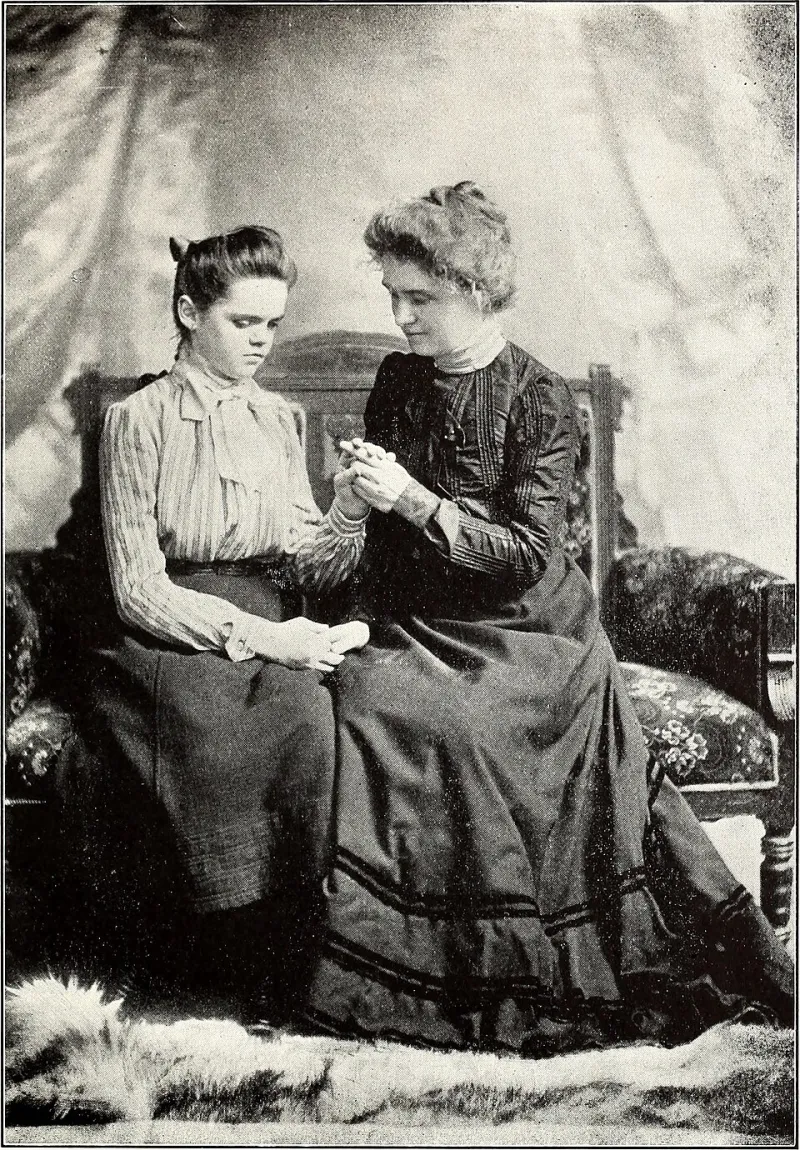
Photo: Internet Archive Book Images, No restrictions, via Wikimedia Commons
Ask an operations team to describe a well-handled assistance claim and they will usually describe a conversation. The customer rings, explains what has gone wrong, answers a handful of diagnostic questions, agrees a time and receives a confirmation. The whole apparatus — scripts, quality monitoring, training, satisfaction surveys — is built around the spoken word.
For a significant number of UK customers, that apparatus is the problem. Deaf customers, people with hearing loss, customers with speech impairments arising from stroke, motor neurone disease, cerebral palsy or surgery, and those for whom spoken English is not the easiest channel all encounter a service that can be technically available and practically unusable at the same time. Under the Equality Act 2010, providers are expected to make reasonable adjustments in advance rather than on request. Under the Consumer Duty, vulnerability of this kind is squarely within the outcomes framework. The commercial argument points the same way: these are customers with policies, households, vehicles and heating systems like anyone else.
The telephone-shaped assumption
Most assistance journeys contain at least three voice-dependent moments: intake, triage and confirmation. Each can fail differently.
At intake, a call-centre queue that offers only a number excludes the customer at the first step. At triage, rapid-fire diagnostic questions assume hearing, speech and a shared vocabulary of boilers and stopcocks. At confirmation, an appointment agreed verbally and never written down leaves the customer dependent on a phone call they may not be able to take. A fourth moment — the engineer at the door, ringing a bell that cannot be heard — is where otherwise well-designed processes quietly collapse.
Intake: more than one door
Channel choice is the foundation. A mature service offers, as standard rather than as an exception:
- Text-based contact through a monitored queue, whether SMS, web chat or app messaging, with the same service levels as the phone line.
- Relay services, including the UK's text relay and video relay interpreting options, with agents trained in how they work and how turn-taking differs.
- Email and web forms that are genuinely triaged, not treated as a mailbox of last resort.
- Third-party authorisation, allowing a nominated advocate, carer or family member to act with recorded consent.
Crucially, every channel must lead to the same workflow. A common failure mode is a text channel that can log a query but not book an appointment, forcing the customer back to the telephone to complete what they started.
Triage without voice
Diagnostic scripts can be rebuilt for non-verbal channels without diluting their usefulness. Structured questions with clear options, photographs uploaded from a phone, short video clips of a fault, and a free-text field that invites the customer to describe the problem in their own words all produce usable information. Where a decision genuinely requires a conversation, an interpreter should be arranged rather than a relative being invited to translate — particularly where children might otherwise be drawn into adult responsibilities.
A pre-registered communication preference, held on the policy record and visible to every agent, is one of the cheapest and most effective interventions available. So is a short, customer-completed communication passport setting out the best channel, any interpreting needs and what to do at the door.
The engineer at the door
Field operations are where inclusion is most often lost. Practical adjustments are unglamorous and largely procedural:
- Mandatory text or app notification before arrival, with a named engineer.
- A defined door protocol: knock and wait, use a flashing doorbell or vibration alert where registered, and never conclude absence from a single unanswered ring.
- Job notes that carry the communication preference to the engineer, so the customer is not obliged to explain themselves on the doorstep.
- Guidance for engineers on writing information down, avoiding talking from another room, and not assuming that an accompanying friend is the decision-maker.
Missed appointments in these households are frequently misdiagnosed as no-access when the true cause is an unheard knock. That distinction matters in complaints data.
Training and reasonable adjustments
Deaf awareness training is necessary but insufficient. Staff need confidence in the mechanics: how a relay call runs, how to structure a written triage, when to escalate to an interpreter, how to record a preference so that it persists. Quality monitoring must sample non-voice contacts with the same rigour applied to calls, otherwise the new channels are peripheral by default.
Standards that can be measured
Accessibility commitments that are not measured tend to be aspirational. A workable set of indicators includes:
- Channel parity — response and resolution times compared across phone, text and relay, reported quarterly.
- Adjustment flag accuracy — the proportion of records where a registered need is correctly visible at the point of contact.
- First-contact resolution by channel, to detect channels that log but do not resolve.
- Missed-appointment rate segmented by communication need, with root-cause coding.
- Satisfaction and complaint rates by channel, reported alongside volume.
- Interpreter and relay usage, including failed connections and waiting times.
Reported together and reviewed by a named executive owner, these measures turn inclusion from a statement of intent into an operating discipline. They also produce precisely the kind of evidence that regulators increasingly expect a firm to hold about how different groups of customers actually fare.
The test is simple enough. If a customer cannot hear the alarm, cannot speak to the agent and cannot take the callback, the assistance should still arrive.